
Hello there,
Recently I’ve been trying to frame a lot of my work as Artistic Studies.
That is to say, in the same way that a painter might paint a still life to gain a deeper understanding of light and shadow, I’m developing games to explore ideas.
This helps my practice in a few ways:
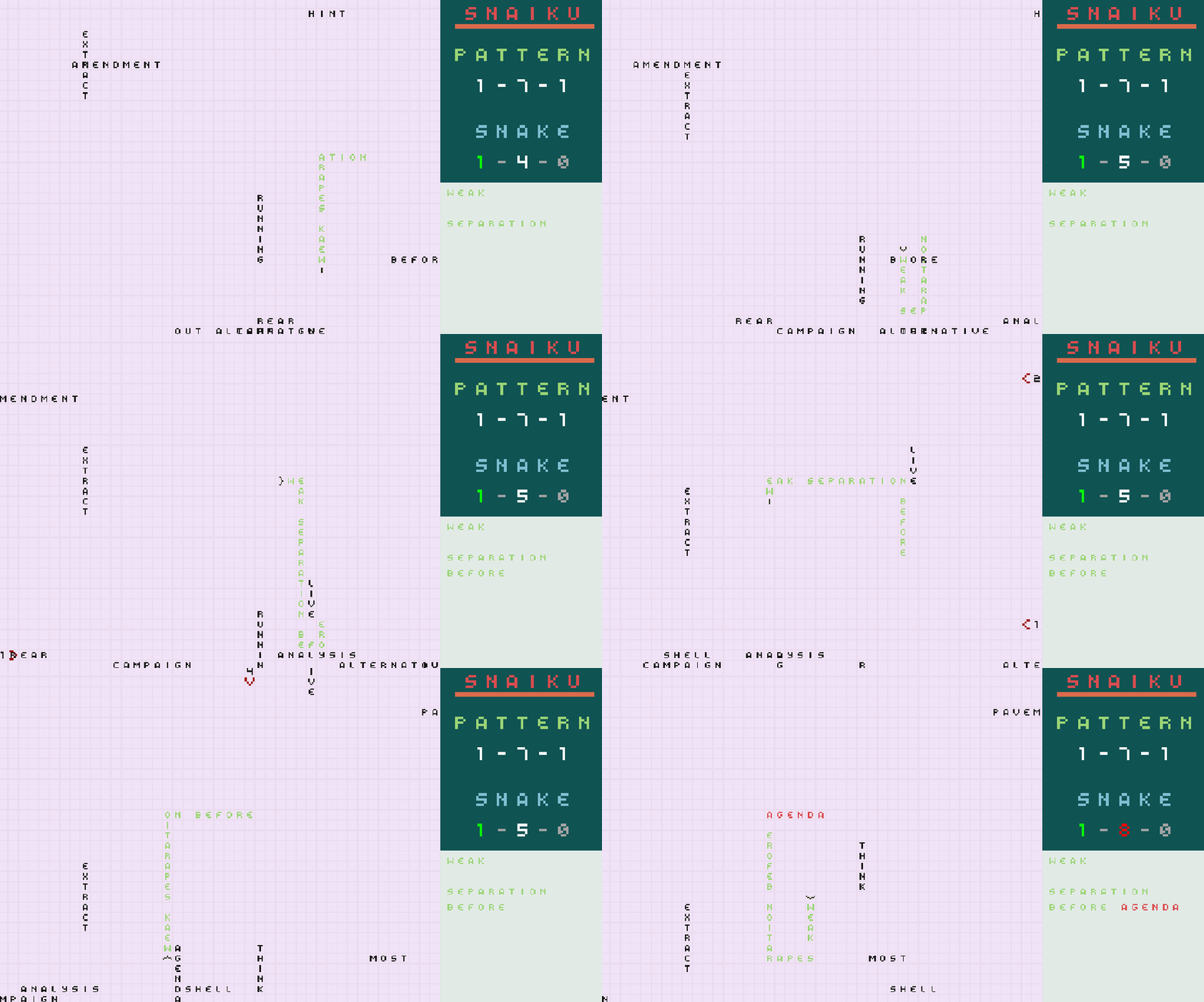
Part 1: Brain Crack
Thinking of all work as experiments and explorations stops me from over-thinking ideas. It is easy, in any artistic field, to become held back by the weight of your own expectations.
If you spend enough time thinking, and talking, about an idea it can become so monumental in your mind that, no matter what you do, you’ll never make something as perfect as what is in your head.
This phenomenon is referred to as “Brain Crack” by the multi-media artist and proto-vlogger Ze Frank. He adds that:
“Most ideas kinda suck when you do em’, and, no matter how much you plan, you have to do something the first time.
You are almost guaranteed that the first time you do something it’ll blow!“
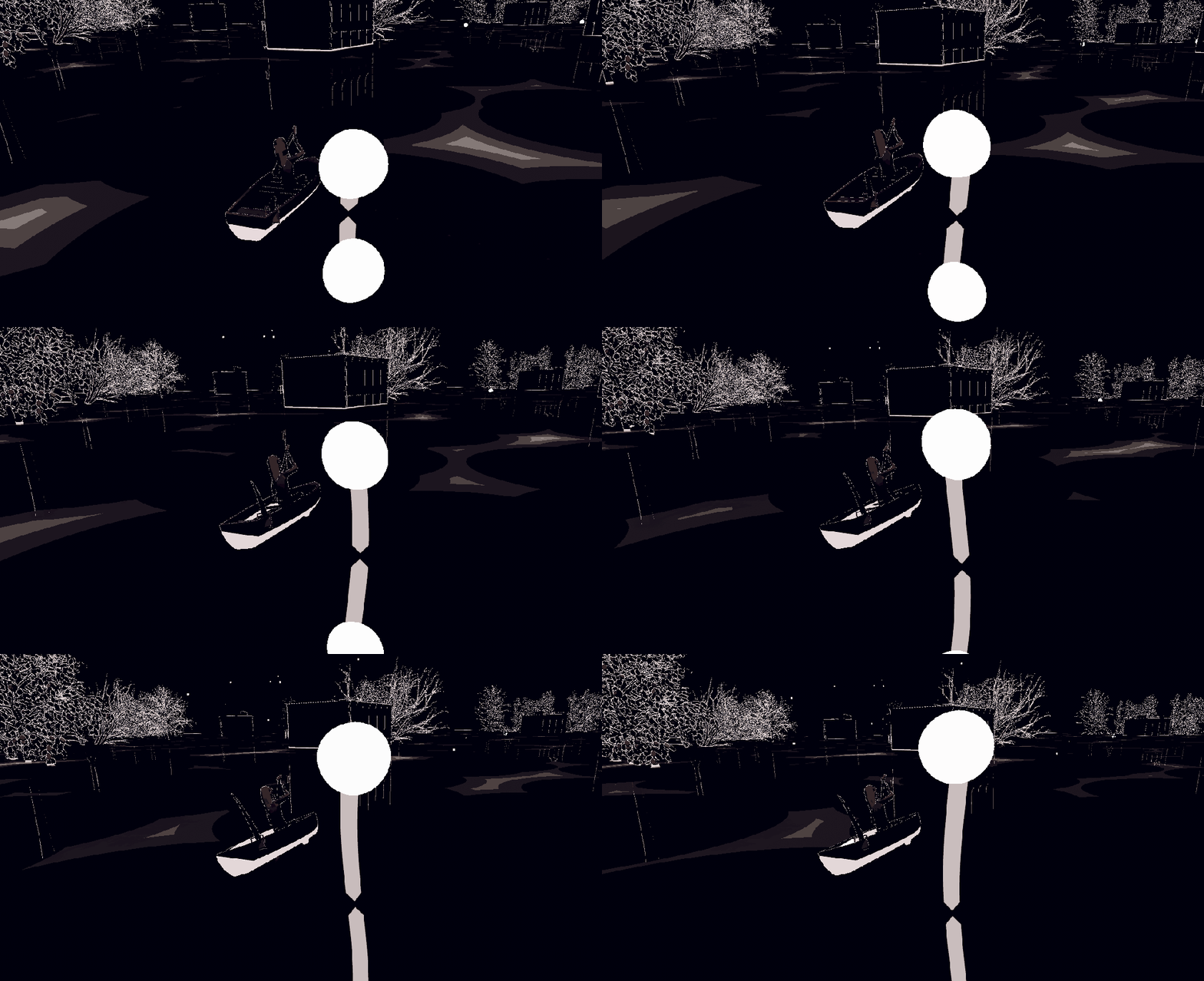
Part 2: Rapid Iteration
As pointed out above, the first time you do something it’ll most likely be bad.
And that’s fine!
- Sometimes the idea is fundamentally flawed in someway, and you won’t know until you make it!
- Sometimes you just need practice!
That’s the point of studies!
If you go through the world terrified of failing you will either:
- Be sad, or…
- Never make anything interesting.
Failure isn’t just an option, failure is a requirement!
Everything you make builds on what came previously. What you learned from exploring these themes, and mechanics, and ideas.
So when you remove the baggage of needing every work to be a complete packaged product, and just focus on the ideas you are exploring and experimenting with, you can develop and iterate much quicker, and ultimately produce more unique and interesting art.

Part 3: Mental Health
As stated above, your first attempt will likely fail to live up to your expectations.
And full commercial games can take years to make!
Treating works as studies helps keep me sane by:
- Granting more ability to deliver better, more thought out, games when I do make larger scoped projects. I can put into practice the understanding gained from numerous smaller explorations into the themes and ideas.
- Keeping me aware that nothing ever truly fails. Ultimately, even my larger works are exploring themes and ideas. If I get to the end as a better designer, better artist, better equipped to make future works (and to understand how we think and play and interact with each other), then the project was a success!
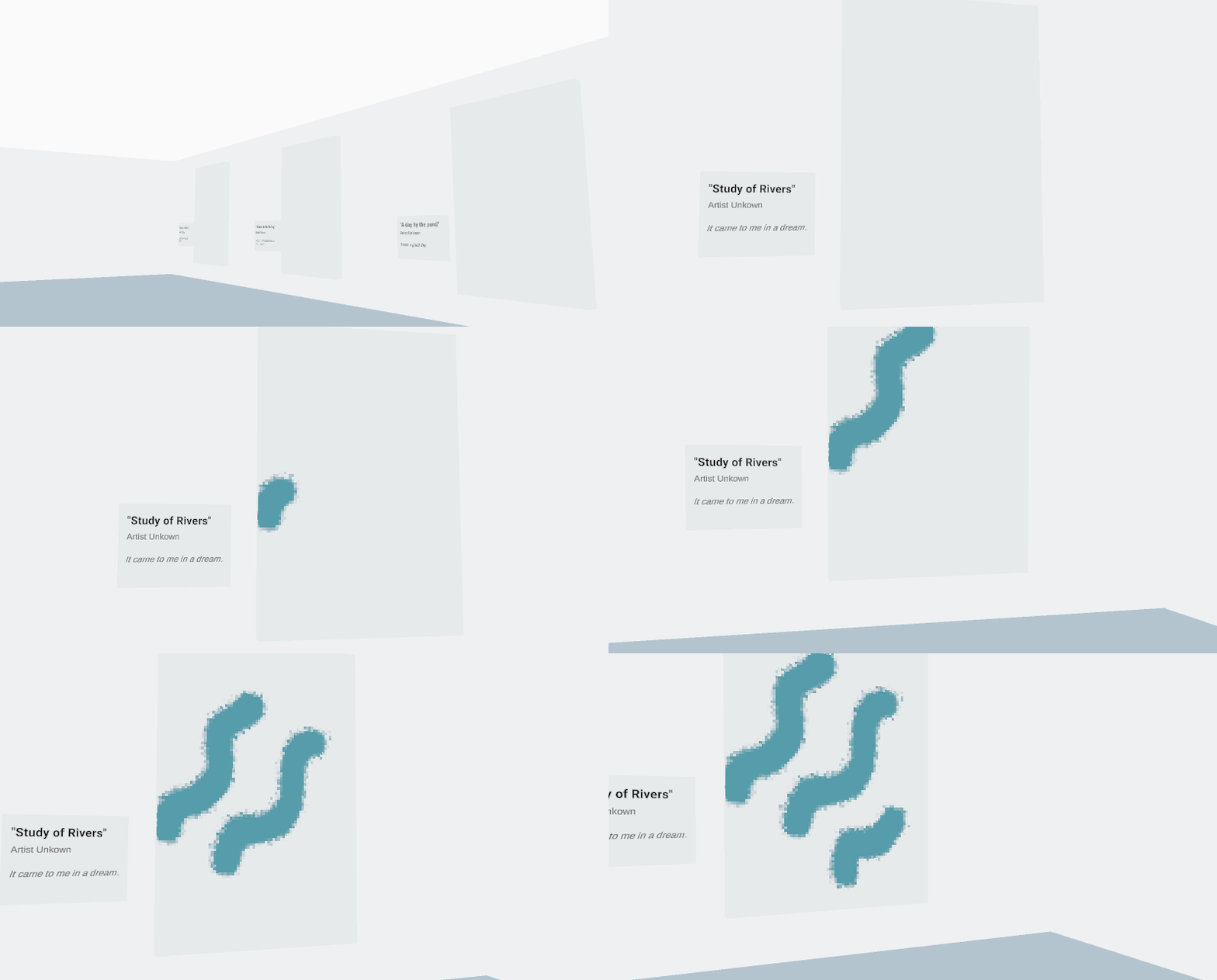
The End is never The End is never The End is ne…
So that’s why I’ve been framing my games as studies.
Let me know what you think, or if you have anything to add!
Everything you make builds on what came previously.
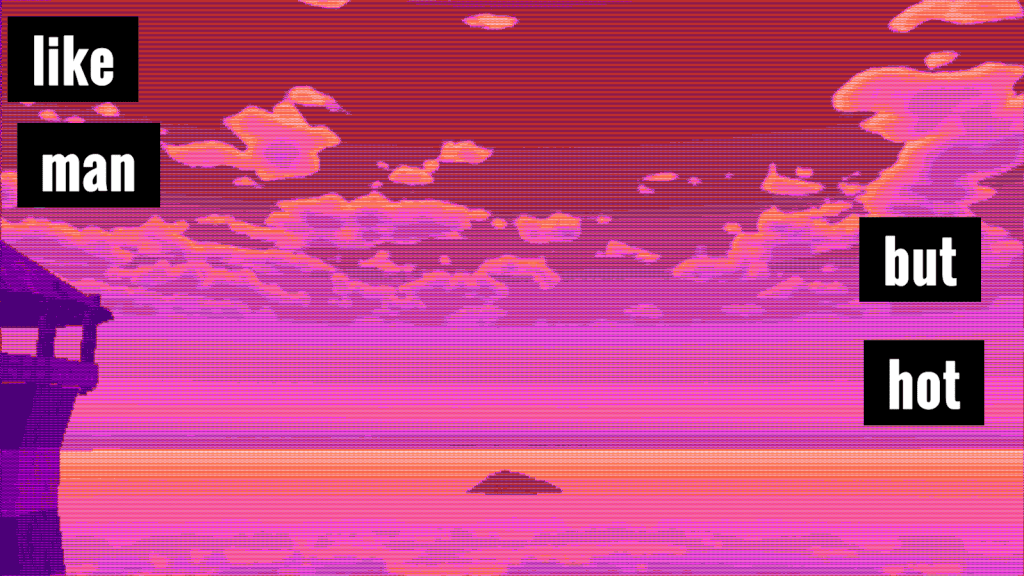
This achieved what I wanted, with a higher focus on player expression over exploration (compared to Community Gardens), but without being so broad that it stops being a game (like Midnight Ceiling). I plan to explore these themes further, hopefully providing more diversity of world design for players to be responding too, but while maintaining this level of player agency.
Note:
I’ve scattered some screenshots throughout this post, detailing my experience making a series of games exploring Asynchronous Player Communities and Making Art.
However, these are not the only games I made over the past 5 years, and the ideas in this post don’t just apply to artsy experimental games.
The major project I’m currently working on, Key Fairy, comes as a direct result of a previous smaller works made by me, and my co-developer Niosis, in the years leading up to it:
- Tesselator was my first attempt at a bullet-hell without the ability to shoot
- The floaty, frenetic, movement focused gameplay is evolved partly from games like Niosis’s Spiral Mage, and my (terribly named) Ultra-Neon-Inter-Spacial-Soul-Drifter
- The aesthetic comes from Niosis’s personal art-style developed over years
- The theming and vibe was explored in Niosis’s games Micoruin and Zantzagore, as well as in both of our experience with TTRPGs
- Ultimately the game exists as a combination of Niosis’s explorations in hand-drawn art and ttrpg theming and world design, and my explorations into movement-focused action and non-violent protagonists.

The point is, this isn’t just an artsy thought experiment, it’s a framework that helps me be a better, more thoughtful, designer.
Final Note:
I have a lot more thoughts about this topic. At some point I may write something longer and more thought out. I’d like to further explore:
- How it’s not just making games that help you explore game ideas. I find it really helpful, for instance, to write about it!
- How sometimes you are deepening ideas, and sometimes you’re broadening them
- Micro-game design and the values it brings
- How devs struggle to develop jam and student games in ways that further their practice
- “Dream Games”, and how the idea of them destroys your ability to make anything
- Rapid iteration on complex game ideas
- The idea of “Wasting Work”
But, in the spirit of studies, I figured I’d write something quick to explore these ideas!
Lots of Love,
Tex
 Tex Barnes
One thought on “Games as Studies”