
So I was talking to this games journalist at PAX.
I was talking about our game Key Fairy, a Pacifist Bullet-Hell. And at some point I said something along the lines of:
“It’s interesting how much violence is the assumed default in video games. Like, in Zelda, your child protagonist spends the majority of the time murdering their way through Hyrule. That’s weird, right?”
And this really smart games journalist, someone who I do respect, said,
“Well he’s not just a crazed murderer right! They are attacked, or provoked? they are working in self defence!”

The first character in any story is the Author
Video game protagonists aren’t real.
The provocation, the excuse, is provided by the game’s designers.
People chose to make a world which requires violence.
And they chose to make a character whose primary tool is violence.
They didn’t need to make those choices, but they did.

So often when talking about games we are unable to extricate ourselves from the fabricated universe of the game.
Even when critiquing games, we stay within the boundaries set by the authors.
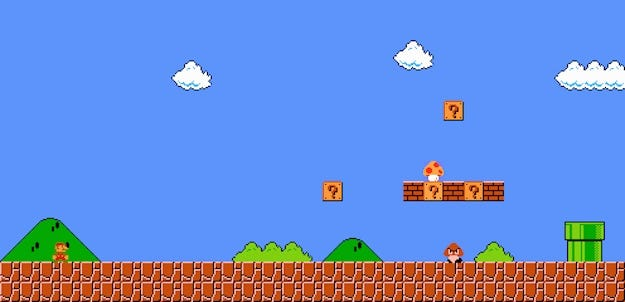
Is this Bad?
Well, it’s complicated.
It’s not always bad to critique art on its own terms.
I personally prefer platformers over strategy games. If I am critiquing star craft, is it reasonable for me to argue that it should be more like Mario?
And often people only want to know if a game is, you know… good! Is it fun? How long is it? What sort of game is it?

But, when we can only see what is diegetic to these fantasy worlds, we deprive art of the power to say anything deeper.
Call of Duty can’t be political, because in order for it to say anything about the “real-world” there needs to be a “real-world” for it to critique.
A certain breed of “Gamers” hate when games are “Politicised” because they are invested in the idea that games are both “Real”, and “Not-Real“
They are “Real“, in that they have a world that is self-contained, that exists, separate from exterior technology, or culture, or authorship.
And they are also “Not-Real”, in that they can neither relate to the outside world, nor be perceived by it.

But this is wrong, games are no more “self-contained” than a yard-sign.
Every game is in relationship, not just with the history of games, but with the broader history and experience of humanity.
Games are especially a reflection of the culture and beliefs of those fortunate enough to design them. A group historically made up of straight, cis-gender, upper-middle-class, highly-educated men.

And generally men who draw a lot of inspiration from the history of tabletop wargames developed in the West, wargames which in turn draw from a colonial history of warfare and bloodshed.
Link isn’t a killer because he is provoked.
He is a killer because we have spent thousands of years working under the belief that:
Violence is Heroic
That violence is a good way to achieve your goals.
To keep evil at bay.
To save those you love, from barbarous forces.
To be a hero.
The Strong do what they can, and the Weak suffer what they must.
– Thucydides
To be clear, these characters aren’t real. It’s not harmful to fight them, it’s not cruel to kill them, it’s not bad, morally, to play Zelda.
The point isn’t that games shouldn’t be violent.
It’s that these dynamics aren’t an innate force of the universe.
Video games, like all art, Exist in Relation to the “Real World“.
They are saying things, about violence, about exploration, about consumption, about art…
And when we talk about them, and design them, we should be thinking about that.

 Tex Barnes